Choosing lighting components for commercial electric vehicles is not a cosmetic decision. It affects visibility, uptime, energy use, driver confidence, and public safety. A delivery van may operate before sunrise, beside loading docks, and through heavy rain. Its lamps must remain clear, stable, and easy to service. That is the real challenge.
A reliable selection process begins with the vehicle’s working conditions, not a catalog image. Engineers should assess voltage behavior, thermal load, vibration, dust, water exposure, optical performance, and connector durability. They should also confirm electromagnetic compatibility and documented testing from reputable manufacturers. For fleet owners searching how to choose lighting components for commercial electric vehicles, these checks create a practical framework. LED efficiency matters, but efficiency alone does not guarantee long service life. A sealed housing can still fail when heat has nowhere to escape. Small details matter.
Experienced technicians also consider installation time, replacement access, spare-part consistency, and diagnostic support. A component that saves energy but delays a roadside repair may increase total operating costs. The best decision balances safety, reliability, compliance, and measurable fleet value. Still, no checklist is perfect. Real routes expose weaknesses that laboratory figures may miss. Pilot testing on representative vehicles, followed by inspection and driver feedback, should guide final approval. Careful choices protect people, equipment, and the reputation built around every commercial electric vehicle.
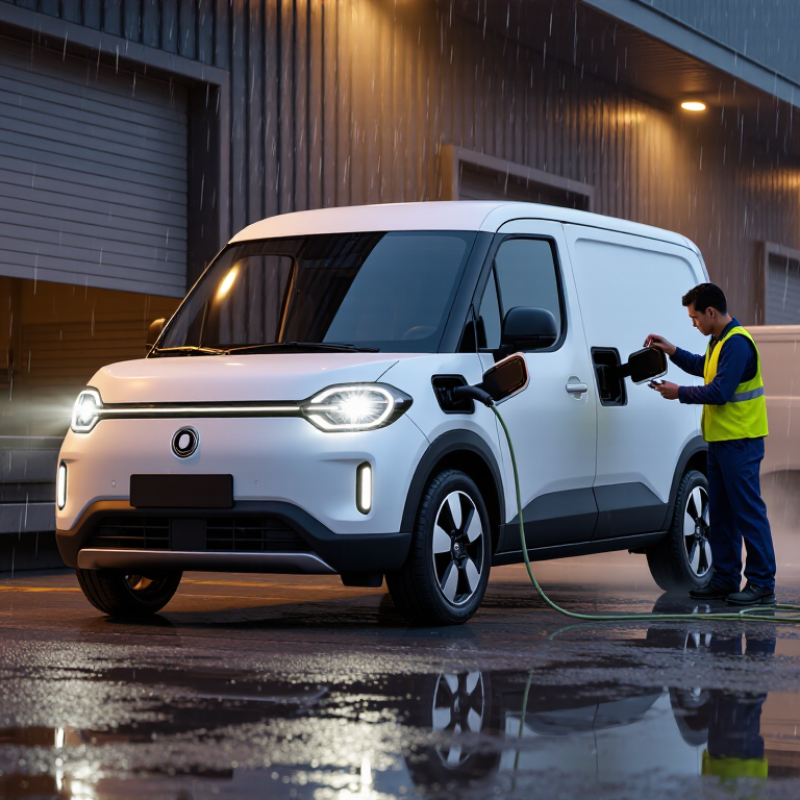
Commercial EV lighting starts with the road-facing essentials: headlamps, daytime running lamps, turn signals, and side markers. These components improve visibility around large vehicles, especially near loading zones and busy intersections. Rear lamps combine tail, brake, and reverse functions, while rear fog lamps may support safer operation in poor weather. Interior dome lamps, step lights, and cargo-area lights help drivers inspect packages after sunset.
LED modules are widely used because they consume little energy and respond quickly. However, the LED itself is only one part of a dependable system. Optical lenses shape the beam, heat sinks control temperature, and electronic drivers regulate current. Connectors and wiring must resist vibration, moisture, road salt, and repeated door movement. Commercial EVs may also need work lights, warning beacons, and illuminated license-plate areas, depending on their operating roles.
Choosing these components requires practical fleet testing, not only a laboratory review. Engineers should check light distribution, glare, thermal cycling, water resistance, and compatibility with the vehicle’s low-voltage electrical system. A brighter lamp is not always a safer lamp. Poor beam control can distract approaching drivers. No design is perfect. Service teams also need accessible mounting points and replaceable assemblies, because a delivery vehicle cannot remain idle for a minor lighting fault. Some manufacturers overlook this maintenance detail. It deserves more attention.
Commercial EV lighting is a safety system, not a decorative feature. NHTSA’s Traffic Safety Facts 2022 reports that 76% of pedestrian fatalities occurred in dark conditions. For delivery vans and buses, effective lamps must reveal road edges, cyclists, loading zones, and turning movements clearly.
Lighting components affect visibility through beam accuracy, color consistency, thermal control, and vibration resistance. A poorly sealed lens can scatter light after rain. Excessive glare can also hide a pedestrian instead of protecting them. The WHO Global Status Report on Road Safety 2023 recorded approximately 1.19 million annual road deaths worldwide, reinforcing the cost of weak visibility. Small errors spread.
Field inspections often find practical failures rather than dramatic defects. Lamps may work, yet sit behind a dirty cover or suffer uneven brightness across a fleet. Engineers should verify photometric performance, connector durability, ingress protection, and warning-light visibility during charging and low-speed operation. Commercial EVs also need lighting layouts that remain visible when cargo doors open or equipment blocks rear lamps.
Regulatory compliance is only the baseline. UNECE Regulation No. 48 addresses lamp installation, while Regulation No. 149 covers road-illumination devices. Testing should include wet lenses, cold starts, vibration, battery-voltage changes, and repeated duty cycles. No lamp is perfect. A reflective review of real routes may expose blind spots that laboratory checks miss. Visibility is shared.
Commercial EV lighting faces harsher conditions than ordinary road use. Parts must handle vibration, dust, rain, temperature swings, and frequent charging cycles. Brightness alone is not enough.
Thermal control matters because heat can reduce LED output and shorten service life. Check lumen stability after extended operation, not only during a short bench test. Optical design also deserves close attention. A focused beam can improve road visibility, while controlled glare protects nearby drivers and pedestrians. Color consistency helps cameras and human observers read signals correctly.
Electrical performance should include low power demand, stable voltage behavior, and protection against surges. Review connectors carefully. A loose terminal near a wheel well can create intermittent lighting, which is difficult to diagnose. Electromagnetic compatibility matters too, especially when lighting operates beside communication and battery systems. Sealing ratings, impact resistance, and connector serviceability should match the vehicle’s working environment.
Field inspections often reveal small weaknesses first. Condensation inside a lamp. Brittle insulation. A connector that takes too long to replace. These details affect fleet downtime. I would also question claims based only on laboratory tests. Real routes include potholes, wash cycles, long idle periods, and uneven maintenance. No selection process is perfect. Still, combining thermal, optical, electrical, mechanical, and service data gives commercial EV lighting a more dependable foundation.
Commercial EV lighting affects range, maintenance, safety, and exterior design. Efficient choices begin with real duty cycles, not catalog wattage. LED modules can reduce electrical load, especially on buses and delivery vehicles operating for long hours. However, efficiency depends on optics, thermal control, and electrical conversion. A bright lamp that wastes light is still inefficient. Measure usable illumination at roads, loading zones, and steps.
Vehicle designers should consider lighting during the first sketches. Slim modules can support aerodynamic surfaces and preserve cargo space. Sealed housings help resist rain, dust, vibration, and repeated washing. Heat sinks need airflow or a reliable thermal path through the mounting structure. Excess heat accelerates output decline. It also shortens service life. In fleet work, connectors and access panels matter as much as lumen ratings. Technicians may need to replace a unit quickly beside a busy depot.
Control systems offer another energy opportunity. Dimming during low-demand periods, adaptive signals, and fault monitoring can reduce unnecessary consumption. Yet software should not create confusing brightness changes. Drivers, pedestrians, and maintenance teams need predictable behavior. Testing should include cold starts, summer heat, voltage variation, and vibration. No calculation is perfect. A design may perform differently after months of road grime. Reviewing field data and revising the specification is often the honest choice.
| Lighting Component | Typical Engineering Range | Energy-Efficiency Contribution | Vehicle-Design Benefit | Key Selection Criteria | Commercial EV Relevance |
|---|---|---|---|---|---|
| LED Light Source | Approximately 80–160 lm/W at the system level, depending on optics, drive current and thermal conditions; typical service life is 30,000–100,000 hours when properly managed. | Produces the required illumination with lower electrical power than incandescent or halogen sources. Lower lighting load can reduce auxiliary energy consumption. | Compact size supports thinner lamps, flexible styling and more usable installation space. | Luminous flux, color stability, junction temperature, dimming capability, optical compatibility and qualification for vehicle vibration. | Suitable for headlamps, signal lamps, marker lamps, interior lighting and illuminated vehicle-access systems. |
| Constant-Current LED Driver | Typical electrical efficiency of approximately 85–95%; supports regulated current over a wide vehicle supply range, subject to design. | Reduces over-driving, limits unnecessary heat generation and maintains consistent output as battery voltage changes. | Enables dimming, diagnostics, soft-start functions and integration with vehicle control networks. | Input-voltage range, electromagnetic compatibility, transient protection, dimming method, thermal protection and standby consumption. | Important for 12 V, 24 V and higher-voltage auxiliary architectures used in buses, delivery vehicles and work trucks. |
| Optical Lens and Reflector | Optical efficiency commonly ranges from approximately 75–95%, depending on material, surface finish, beam pattern and assembly tolerances. | Directs more of the generated light toward the target area, reducing wasted flux and allowing a lower LED drive current for the same lighting result. | Supports thin lamp profiles, controlled beam shapes, uniform appearance and distinctive design signatures. | Beam uniformity, glare control, optical clarity, UV resistance, temperature stability and resistance to yellowing. | Helps meet photometric requirements while preserving a compact front, rear or side-lamp package. |
| Thermal Management | Aluminum heat spreaders, thermally conductive interfaces or lamp housings are commonly used; target thermal resistance depends on LED power and packaging. | Maintains LED efficiency at operating temperature and reduces output depreciation caused by excessive heat. | Allows a smaller light source without sacrificing reliability, provided the housing has sufficient heat-dissipation capability. | Thermal path, enclosure airflow, mounting surface, ambient temperature, heat-soak behavior and material compatibility. | Critical for long operating cycles, high ambient temperatures and lamps mounted close to battery, inverter or power-electronics compartments. |
| Sealed Housing and Connector | Common protection targets include IP67 for dust and temporary immersion protection; higher pressure-wash protection may require a suitable IP6K9K-rated design and testing approach. | Prevents moisture and contamination from increasing electrical resistance, leakage current or premature component failure. | Enables hidden wiring routes, compact packaging and reliable installation in exposed exterior locations. | Sealing design, connector retention, corrosion resistance, pressure equalization, cable routing and serviceability. | Especially important for buses, refuse vehicles, construction vehicles and delivery fleets exposed to rain, road spray and frequent washing. |
| Dimming and Control Interface | Control methods may include PWM, analog control or vehicle-network commands; practical dimming range depends on the driver and LED module. | Reduces power consumption when full brightness is not required, such as during parked operation, loading or low-traffic conditions. | Supports adaptive signatures, welcome lighting, work-zone illumination and coordinated vehicle functions. | Flicker performance, control resolution, fault reporting, network compatibility and low standby current. | Useful for fleet vehicles that operate for long hours and need lighting levels matched to route, task or safety conditions. |
| Color and Photometric Calibration | White lighting is commonly specified by correlated color temperature, often approximately 5,000–6,500 K for exterior applications; exact values depend on the function and regulations. | Consistent color and intensity reduce the need for over-sizing individual modules to compensate for variation. | Improves visual consistency across multiple lamps and supports a coherent vehicle appearance. | Color tolerance, luminous intensity, chromaticity stability, glare control and compliance with applicable lighting regulations. | Important for safety lamps, front lighting, interior visibility and fleet-wide replacement consistency. |
| Modular Serviceable Architecture | Replaceable modules can reduce repair scope compared with replacing an entire lamp assembly; actual maintenance savings depend on access, parts availability and labor. | Extends useful vehicle life and avoids the energy and material impacts associated with replacing complete assemblies unnecessarily. | Allows common interfaces, scalable lamp designs and simplified integration across different vehicle body variants. | Module availability, connector durability, sealing after service, diagnostic access and compatibility with fleet maintenance procedures. | Valuable for commercial fleets where vehicle uptime, predictable maintenance and total operating cost are major priorities. |
Fleet operators should evaluate lighting components beyond initial brightness. In field inspections, a lamp can appear strong in the workshop yet perform poorly on wet roads. Check beam uniformity, glare control, color consistency, and visibility from multiple angles. Test the lamps during loading, night driving, and roadside stops.
Durability requires measurable evidence. Review ingress protection ratings, vibration results, thermal cycling data, and lumen maintenance figures. Ask how performance changes after repeated temperature shifts. A reliable supplier should provide test records, traceable specifications, and a clear warranty. Certification matters, but it does not replace practical fleet testing.
Look closely at installation time and service access. A component that saves ten minutes per vehicle can reduce labor across hundreds of units. Confirm connector strength, housing materials, spare-part availability, and compatibility with existing electrical systems. Calculate total cost over the expected service period, not only the purchase price. A pilot run on several vehicles may reveal wiring faults or cleaning problems before wider deployment. This step can feel excessive. It may prevent expensive surprises.
Operators should also record failures honestly. Brightness alone is an incomplete measure. Mud, vibration, winter salt, and careless washing can expose weaknesses that laboratory tests miss. Choosing lighting quality requires evidence, field experience, and a willingness to question attractive specifications.
Common components include headlamps, daytime running lamps, turn signals, and side markers. Rear lamps combine tail, brake, and reverse functions. Interior lamps illuminate cabins, steps, and cargo areas after sunset. Some vehicles also need work lights or warning beacons. Small details matter.
LED modules use relatively little energy and respond quickly. They can reduce electrical load during long delivery or bus operations. However, the LED is only one part of the system. Lenses shape the beam, while drivers regulate current. A bright lamp can still waste light.
Optical lenses control beam direction and reduce unwanted glare. Heat sinks help manage temperature during extended operation. Electronic drivers maintain stable electrical current. Connectors and wiring must resist moisture, vibration, salt, and door movement. Weak connections cause trouble.
Efficient lighting should match real operating schedules, not only catalog wattage. Slim modules can preserve cargo space and support smoother body surfaces. Sealed housings resist rain, dust, vibration, and repeated washing. Thermal paths need airflow or strong contact with mounting structures. Appearance is not everything.
Operators should test beam uniformity, glare, color consistency, and viewing angles. Testing should include loading areas, wet roads, night driving, and roadside stops. Check visibility near intersections and large vehicle blind zones. A workshop test may not reveal road grime problems. Field testing is essential.
Review water-resistance ratings, vibration results, thermal cycling data, and lumen maintenance figures. Ask how output changes after repeated cold and hot conditions. Inspect connector strength, housing materials, and replacement-part availability. Winter salt and careless washing may expose hidden weaknesses. Laboratory data is incomplete.
Commercial vehicles may lose valuable operating time because of minor lighting faults. Accessible mounting points can shorten roadside or depot repairs. Replaceable assemblies help technicians avoid unnecessary full-unit replacement. A small saving per vehicle can matter across a large fleet. Measure twice.
Dimming during low-demand periods can reduce unnecessary electrical consumption. Adaptive signals and fault monitoring may improve efficiency and maintenance planning. Brightness changes must remain predictable for drivers and pedestrians. Test controls during cold starts, voltage changes, heat, and vibration. Software can misbehave.
Compare purchase cost, installation time, energy use, repairs, and expected service life. Run a pilot on several vehicles before wider deployment. Record failures involving wiring, cleaning, moisture, and vibration. A warranty and certification help, but neither replaces practical evidence. The specification may need revision.
Choosing the right lighting components is essential for commercial electric vehicles because lighting directly influences safety, visibility, energy use, and long-term operating costs. Key components may include headlights, daytime running lights, brake lights, turn signals, rear lights, marker lamps, interior lighting, and warning lights. Each part should provide consistent illumination, clear signaling, and dependable performance in changing weather and road conditions. When considering how to choose lighting components for commercial electric vehicles, fleet managers should evaluate brightness, beam coverage, response time, durability, thermal management, waterproof protection, and resistance to vibration.
Well-selected lighting components can improve driver awareness, help other road users recognize vehicle movements, and support efficient battery usage through low-power designs. They can also complement the vehicle’s structure, appearance, and maintenance strategy. Fleet operators should compare service life, installation requirements, failure rates, replacement costs, and warranty support rather than focusing only on the initial purchase price. A high-quality lighting system delivers reliable visibility, reduces downtime, and provides better value throughout the vehicle’s operating life.

EV Light