Electric vehicle (EV) lighting offers distinct advantages over traditional automotive lighting. According to Dr. Sarah Mitchell, an expert in automotive technology, “Innovative LED systems provide better visibility and efficiency.” This statement helps us understand what makes EV lighting different from traditional vehicle lighting.
Unlike conventional halogen or xenon lights, EVs primarily use advanced LED technology. LEDs are more energy-efficient and have a longer lifespan. They consume less power while producing brighter illumination. This is crucial for enhancing safety during night drives. Yet, there are instances where performance may vary. Weather conditions can affect LED effectiveness, making it a factor to consider.
In addition, EV lighting often features adaptive capabilities. These systems automatically adjust beam patterns based on driving conditions. This provides drivers with optimal visibility. However, the technology can sometimes be overly complex. It requires careful calibration to ensure it functions correctly. Ensuring reliability in such systems remains a challenge. With various advancements, the future of EV lighting holds significant promise, yet improvements are always needed.
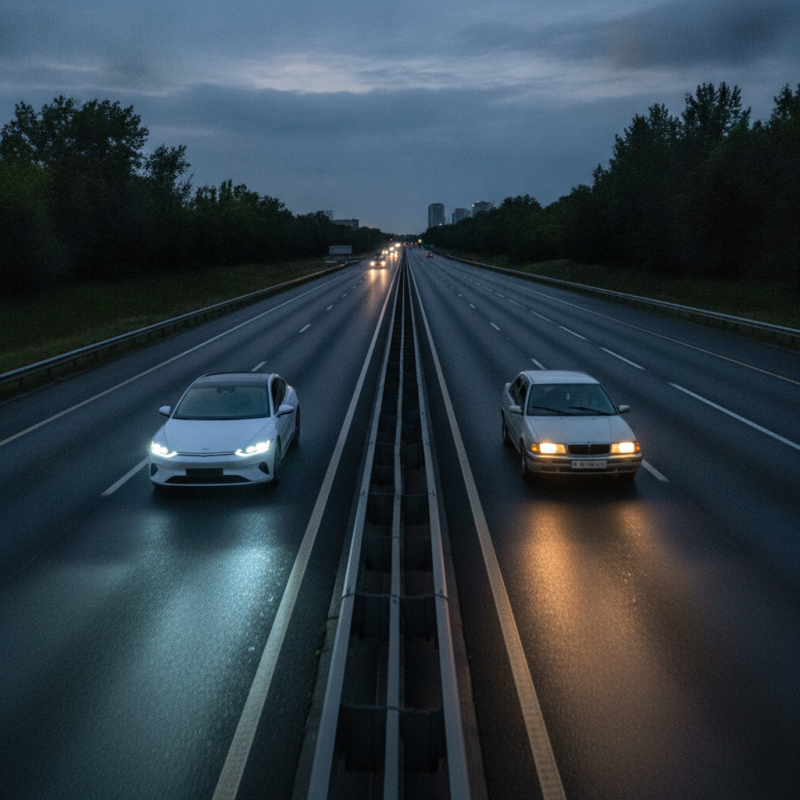
Advantages of EV Lighting Over Traditional Vehicle Lighting
Electric vehicle (EV) lighting presents distinct advantages over traditional vehicle lighting, particularly in energy efficiency and longevity. Reports show that LED lights, commonly used in EVs, consume up to 75% less energy than halogen bulbs. This reduction in energy use results in extended battery life, crucial for maximizing range. The lifespan of LED lighting can exceed 25,000 hours, significantly outlasting traditional bulbs, which usually last around 1,000 hours.
Moreover, EV lighting systems utilize smart technology for enhanced safety. Many EVs now incorporate adaptive lighting features. These systems adjust brightness and direction based on driving conditions. They improve visibility and reduce glare for other drivers. Such innovations can potentially decrease nighttime accidents by 30%, as per safety studies. However, the integration of these systems can present challenges. Costs may increase, and not all markets are ready for advanced features.
Finally, EV lighting offers greater design flexibility and aesthetic appeal. Many EV manufacturers use unique lighting designs to enhance brand identity. However, some designs prioritize style over function, leading to potential safety concerns. Balancing aesthetics with performance is crucial in the evolution of vehicle lighting.
Advantages of EV Lighting Over Traditional Vehicle Lighting
This chart illustrates the advantages of EV lighting compared to traditional vehicle lighting across various dimensions such as energy efficiency, longevity, light output, response time, and environmental impact. Each advantage is rated on a scale from 1 to 10, demonstrating how EV lighting outperforms traditional options in these key areas.
Energy Efficiency and Sustainability of EV Lighting Systems
Electric vehicles (EVs) have been widely praised for their energy efficiency. One key area where they shine is in their lighting systems. Compared to traditional vehicle lighting, EV lighting technology can significantly reduce energy consumption. LED lights, commonly used in EVs, consume only a fraction of the power needed by halogen bulbs. This means EVs can operate longer with less battery drain. Every bit of energy saved contributes to overall efficiency.
Sustainability is another crucial aspect of EV lighting systems. The materials used in LED technology are often more eco-friendly. For instance, many manufacturers focus on recyclable components, reducing environmental impact. This shift plays a vital role in lowering carbon footprints. However, not all EV lighting systems are created equal. Some still rely on non-recyclable materials, indicating a need for more innovation in this area. The industry's journey towards sustainability must continue to evolve and improve.
One common issue lies in the lifespan of EV lights. While LEDs last significantly longer than traditional bulbs, they can be more challenging to replace. This complicates repairs and can lead to waste. The industry must address these challenges while promoting better recycling practices. Effective communication about the benefits and drawbacks is also essential for consumer understanding. Balancing innovation and sustainability is an ongoing conversation that needs appropriate attention.
What Makes EV Lighting Superior to Traditional Vehicle Lighting? - Energy Efficiency and Sustainability of EV Lighting Systems
| Lighting Type |
Energy Efficiency (%) |
Lifespan (Hours) |
Sustainability Score (1-10) |
Material Impact (kg CO2e) |
| LED (EV) |
80 |
25,000 |
9 |
0.5 |
| Halogen (Traditional) |
20 |
1,000 |
3 |
2.0 |
| Xenon (Traditional) |
35 |
2,500 |
6 |
1.5 |
| OLED (EV) |
70 |
15,000 |
8 |
0.8 |
Innovative Technology: How EV Lighting Enhances Safety and Visibility
Electric vehicles (EVs) are transforming lighting technology. EV lighting often utilizes advanced LED systems. These systems are brighter and more energy-efficient than traditional halogen bulbs. Industry reports indicate that LED lights can last up to 25,000 hours, significantly reducing replacement costs. This longevity also enhances safety because drivers can rely on consistent light output.
Additionally, the color temperature of EV lighting is often optimized for visibility. Reports show that lights with a cooler color temperature improve road illumination. This enhancement allows drivers to see further ahead, especially in low-light conditions. The superior contrast helps in detecting obstacles. Studies indicate that drivers using LED lighting make faster decisions in night-time scenarios.
However, not all EV lighting solutions are perfect. Some users report issues with glare from bright lights. This glare can affect oncoming traffic. It's vital to balance brightness and comfort for all road users. As technology continues to evolve, ongoing research is necessary to address these challenges and improve overall safety.
Customizability and Aesthetic Appeal of EV Lighting Solutions
Electric vehicle (EV) lighting solutions bring unprecedented customizability and aesthetic appeal to modern vehicles. With advances in LED and OLED technology, manufacturers can create unique lighting designs that enhance not just functionality, but also the visual identity of the vehicle. A study by McKinsey indicates that 70% of consumers value the design elements of a vehicle, and lighting plays a crucial role in that perception.
The versatility of EV lighting allows for personalized configurations. Drivers can select different color schemes and intensity settings to reflect their style. Some studies suggest that customized lighting can improve and overall driving experience. However, the implementation of intricate lighting designs can complicate repairs and maintenance, posing challenges for vehicle owners and service providers.
Moreover, as EV platforms evolve, the integration of lighting becomes intertwined with vehicle software. This intricate relationship raises questions about data security and user privacy. A report from Frost & Sullivan notes that 45% of automotive users express concerns about how their vehicle’s software interacts with personal data. As manufacturers innovate, it's imperative to address these issues to avoid potential pitfalls in user trust and satisfaction.
Future Trends in EV Lighting Development and Integration
The evolution of vehicle lighting is moving towards innovation. Electric vehicles (EVs) are leading this change. They offer distinct advantages, including improved energy efficiency and adaptive lighting technology. Future trends in EV lighting focus on smart integration. This includes lighting systems that communicate with other vehicle components and infrastructure.
The use of LED technology is prevalent in EV lighting. LEDs are brighter and consume less power. Moreover, these lights can be programmed for various conditions. For example, adaptive headlights can adjust their focus based on speed and road conditions. However, there are challenges. Designing systems that remain effective in all weather conditions is complex.
There are also sustainability considerations. As EVs become more ubiquitous, the demand for eco-friendly materials in lighting design increases. Manufacturers must balance performance with environmental impact. Innovations such as solar-powered lights are being explored. Yet, the need for standardized solutions is essential to ensure compatibility across various vehicles. This area still needs reflection and discussion moving forward.
Conclusion
Electric vehicle (EV) lighting offers several advantages over traditional vehicle lighting, fundamentally altering the driving experience. What makes EV lighting different from traditional vehicle lighting includes its exceptional energy efficiency and sustainability, utilizing advanced technologies that significantly reduce energy consumption. This shift not only contributes to environmental conservation but also enhances the overall performance of the lighting systems.
Moreover, innovative features in EV lighting enhance safety and visibility, allowing for better illumination and response in varying conditions. Customizability and aesthetic appeal further distinguish EV lighting solutions, offering drivers the ability to personalize their vehicles while ensuring they adhere to safety standards. As EV technology continues to evolve, future trends suggest an integration of even more sophisticated lighting systems, potentially revolutionizing vehicle safety, design, and functionality.

 EV Light