What Are the Top Challenges in Automotive Lighting Design?

Time:2026-09-19 Author:Ethan
0%

Automotive lighting has moved beyond simple illumination. Headlamps now support visibility, styling, communication, and advanced driver assistance systems. This creates a difficult engineering balance between safety, efficiency, appearance, and manufacturing cost. A narrow lamp can look elegant, yet it may limit beam performance or cooling space. A brighter source can improve visibility, but it may increase glare, heat, and energy consumption.

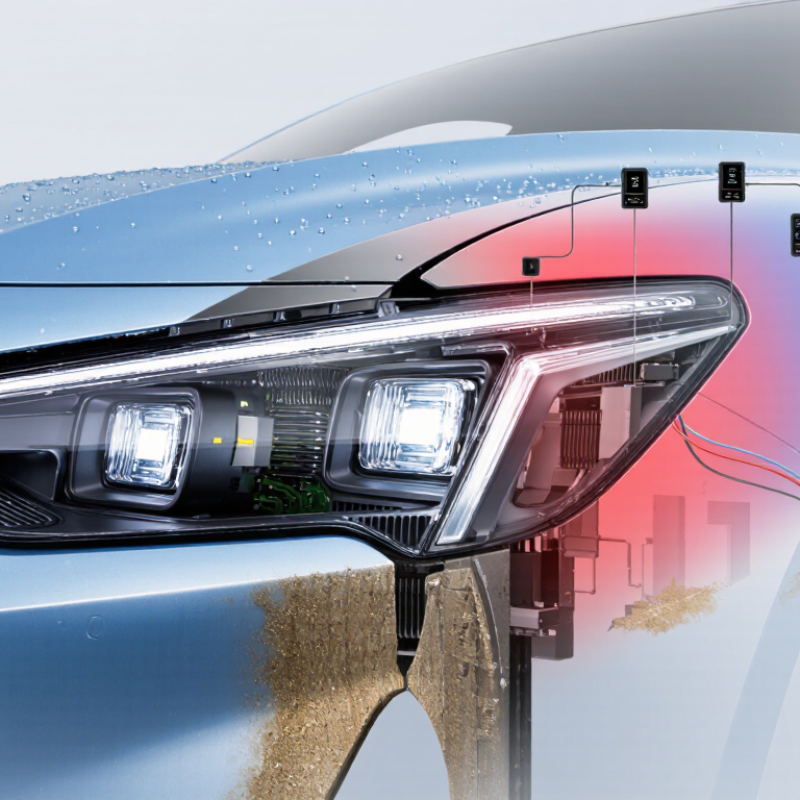
So, what are the challenges in automotive lighting design? Engineers must manage strict photometric requirements, changing vehicle shapes, thermal loads, and complex electronic controls. They also need to consider rain, snow, dust, vibration, and long-term material aging. Small sealing failures can create condensation behind a lens. That detail matters. It can affect reliability and customer confidence.

Modern systems add further pressure. Adaptive beams must respond quickly and safely to road conditions, while software must coordinate sensors, cameras, and lighting modules. Designers also work closely with manufacturing teams to maintain consistent color, brightness, and alignment across thousands of vehicles. Testing in laboratories is essential, but real roads can reveal unexpected reflections, shadows, or driver reactions. Some design assumptions will fail.

A credible approach combines optical simulation, physical prototypes, environmental testing, and feedback from experienced drivers. It also reviews applicable regional safety requirements before production begins. Even careful teams can overlook usability or repair concerns. That is why automotive lighting design requires continuous validation, honest evaluation, and cooperation between engineers, regulators, suppliers, and vehicle manufacturers.
What Are the Top Challenges in Automotive Lighting Design?

Defining the Core Requirements of Automotive Lighting Design

Automotive lighting design begins with core requirements, not styling sketches. The first requirement is useful visibility in darkness, rain, fog, and road glare. NHTSA’s Traffic Safety Facts 2022 reports that darkness was present in nearly half of passenger-vehicle occupant fatalities, despite fewer nighttime journeys. That figure makes beam reach a safety requirement, not a decorative feature.

Engineers must define illumination targets, glare limits, color stability, thermal performance, and service life. UNECE Regulation No. 149 establishes detailed photometric requirements for road-illumination devices. These rules influence beam intensity, cutoff control, signal visibility, and testing procedures. A lamp also operates near heat-producing components, vibration, water, dust, and repeated temperature changes. Therefore, sealing, heat dissipation, and optical alignment need measurable limits. The U.S. Department of Energy’s Solid-State Lighting research identifies LEDs as highly efficient, but efficiency alone does not guarantee reliable automotive performance.

Human factors matter just as much. Drivers must recognize turn signals quickly, while pedestrians need clear vehicle intent. Bright daytime signatures may become confusing at night. Designers often trust simulation results too much. Real roads include worn markings, dirty lenses, aging batteries, and imperfect installation. Those conditions deserve physical testing. A small optical shift can change glare noticeably. This is where requirements become difficult: safety, efficiency, manufacturability, appearance, and regulatory compliance compete within a very small housing.

Managing Regulatory, Safety, and Visibility Requirements

What Are the Top Challenges in Automotive Lighting Design?

Managing Regulatory, Safety, and Visibility Requirements

Automotive lighting design starts with regulatory compliance, but passing a test does not guarantee real-world safety. Engineers must verify beam intensity, glare limits, color, aiming, and response times across different regions. A lamp may perform well in a clean laboratory. Rain, dust, road vibration, and poor alignment can change its behavior. Regional requirements also differ, making one global lighting solution difficult to certify. Clear test records and traceable design decisions support reliable approval processes.

Safety requires attention to failure conditions, not only normal operation. Designers examine overheating, water intrusion, connector corrosion, and sudden light loss. Thermal paths must protect LEDs and nearby plastic parts during long nighttime drives. Redundant circuits can reduce risk, but they also increase weight, cost, and software complexity. Small details matter. A loose connector may create intermittent flicker before a complete failure. That fault can confuse drivers and repair technicians.

Visibility depends on human perception as much as measured output. Engineers evaluate glare, contrast, shadows, and recognition time in tunnels, fog, heavy rain, and unlit roads. Dirty lenses deserve more attention than they usually receive. A strong beam cannot fully compensate for a blocked or poorly aimed lamp. Adaptive systems may improve visibility, yet calibration errors can produce uneven illumination. The design review should include older drivers, changing weather, and imperfect maintenance habits. Some assumptions will still fail. That is where careful field testing becomes essential.

Balancing Optical Performance with Compact Vehicle Packaging

Automotive lighting design rarely fails because of one optical calculation. The harder problem is fitting a precise light system into a crowded vehicle front. Modern lamps must support beam accuracy, thermal control, styling freedom, and service access. Every millimeter matters. A deep reflector may improve efficiency, yet it can conflict with a slim hood line. A thicker heat sink can protect LEDs, but it consumes valuable space behind the lens. In real development programs, these compromises appear early, often during packaging reviews.

Engineers usually begin with digital optical models, then test physical samples in thermal chambers and road-like conditions. Compact packaging changes the angle, distance, and surface available for each optical element. This can create glare, uneven illumination, or unwanted bright spots. Lens curvature also affects beam distribution. Small tolerance shifts may become visible at night. Reliable work therefore combines ray tracing, tolerance analysis, airflow studies, and repeated photometric measurements. Legal requirements must remain central, not treated as a final checkpoint. They protect road users and guide measurable performance.

Experience shows that the best layout is not always the smallest one. Leave room for heat movement. Allow adjustment during assembly. This sounds obvious, but rushed programs often ignore it. I have seen elegant simulations weaken after vibration, contamination, or temperature cycling. That gap deserves honest review. A practical design may use a slightly larger optical cavity to gain stable output and easier manufacturing. It may look less dramatic on a drawing. Yet it can perform better across seasons, production variation, and repair conditions.

Controlling Heat, Power Use, and Component Reliability

Automotive lighting design is no longer limited to brightness and appearance. Engineers must manage heat, electrical demand, and long-term component reliability inside tight spaces. An LED may produce efficient light, yet its circuit board can still become dangerously hot. That heat accelerates material aging and changes optical performance.

Thermal control begins with a realistic heat path. Designers examine the LED package, circuit board, housing, seals, and mounting points as one system. Aluminum heat spreaders can help, but they add weight and manufacturing complexity. Ventilation may reduce temperature, although it can increase exposure to moisture and dust. Small power savings also matter. Adaptive dimming, efficient drivers, and controlled start-up reduce battery load during repeated vehicle functions. Keep testing practical. A laboratory result may not reflect a lamp covered with road grime.

Reliability requires more than a single endurance test. Teams should combine thermal cycling, vibration, humidity, voltage variation, and repeated switching. Connections deserve close attention because tiny cracks can cause intermittent failures. In service, a lamp may face freezing mornings, engine-bay heat, and thousands of hours of vibration. I have found that early prototypes often pass brightness tests but fail after thermal cycling. That assumption needs questioning. Engineers should record temperature at several points, not only near the LED. A two-degree safety margin may look sufficient on paper, but production variation can erase it. Design reviews should include failure data, repair observations, and manufacturing feedback before approving the final lighting system.

LED lighting functions with higher electrical input generally create a greater thermal-management burden. The heat values are representative engineering estimates based on approximately 70% of module input power becoming heat, while the remaining energy produces light and is consumed by optical or control components. Effective heat control supports component reliability and longer service life.

Integrating Electronics, Software, and Adaptive Lighting Functions

Automotive lighting design now depends on more than optics, wiring, and a durable housing. It requires close coordination between electronics, software, sensors, and thermal management. McKinsey’s 2023 industry analysis estimated that automotive software and electronics revenue could reach about $469 billion by 2030, compared with $238 billion in 2020. Lighting is part of this larger shift. It is becoming a software-controlled vehicle function.

Adaptive lighting makes integration harder. A camera may detect a vehicle ahead, while control software adjusts beam intensity within milliseconds. The light-emitting modules must respond smoothly, without glare, flicker, or visible delays. UNECE Regulation No. 123 also sets technical requirements for adaptive front-lighting systems. Engineers must validate these functions across rain, dust, vibration, heat, and low-voltage conditions. A laboratory result is not enough. Road behavior can still surprise us.

The IEA’s Global EV Outlook 2024 reported nearly 14 million electric car sales worldwide in 2023. More electrification increases demand for efficient, software-managed lighting, especially when energy budgets remain tight. In practical testing, a headlamp may show excellent beam control but fail after repeated thermal cycles. That weakness is easy to miss. Software updates create another concern: a small calibration change can alter glare performance. Teams need traceable requirements, hardware-in-the-loop testing, and clear fault strategies. Perfect integration remains an ambition, not a finished state.

FAQS

What is the main purpose of automotive lighting design?

Its main purpose is useful visibility in darkness, rain, fog, and road glare. Appearance matters, but visibility comes first.

Which performance requirements should engineers define early?

They should define beam reach, glare limits, color stability, heat tolerance, and service life. These targets need measurable limits, not vague styling goals.

Why is nighttime visibility especially important?

Darkness appears in nearly half of passenger-vehicle occupant fatalities, despite fewer nighttime journeys. A longer beam can support safer decisions.

How do compact vehicle packages affect lighting performance?

Tight spaces restrict reflector depth, heat-sink size, lens shape, and adjustment access. Every millimeter matters.

What testing methods can reveal real lighting problems?

Engineers should combine optical simulation with thermal chambers, vibration tests, humidity exposure, and road-like measurements. Physical testing exposes weaknesses.

How can a small optical shift affect drivers?

A slight lens or reflector movement can create glare, bright spots, or uneven road illumination. Tiny changes become visible at night.

How should designers manage heat inside a lighting unit?

They should study the complete heat path through the LED, circuit board, housing, seals, and mounts. A two-degree margin may disappear during production.

Can efficient LEDs guarantee reliable performance?

No. Efficient light production does not prevent circuit-board heating, material aging, or optical changes. Heat still wins.

What conditions should reliability testing include?

Testing should include thermal cycling, vibration, humidity, voltage variation, and repeated switching. One endurance test is not enough.

Why should designers leave extra space inside the lamp?

Extra space can improve heat movement, assembly adjustment, manufacturing consistency, and repair access. The smallest layout is not always the strongest.

Conclusion

Automotive lighting design involves far more than creating attractive illumination. The central question, “what are the challenges in automotive lighting design,” includes defining clear requirements for visibility, signaling, styling, efficiency, durability, and user expectations. Designers must manage strict regulatory and safety requirements while ensuring that headlights, taillights, indicators, and interior lighting perform reliably in changing weather, traffic, and road conditions.

Another major challenge is balancing strong optical performance with limited vehicle space and increasingly compact packaging. Lighting systems must also control heat and power consumption to protect components and support long-term reliability. At the same time, modern vehicles require close integration between lighting hardware, electronics, software, sensors, and adaptive functions. These systems need to respond smoothly and accurately while remaining easy to maintain and resistant to vibration, temperature changes, moisture, and repeated use. Successful design therefore depends on coordinating safety, engineering, efficiency, appearance, and intelligent functionality within one dependable system.

Ethan

Ethan

Ethan is a seasoned marketing professional with a deep expertise in our company's innovative product line. With a passion for sharing knowledge and insights, he takes the lead in regularly updating our corporate blog, where he explores industry trends, product features, and effective marketing......