China’s electric-vehicle market is reshaping automotive design, and lighting now carries more responsibility than simple road illumination. The International Energy Agency reported nearly 14 million electric-car sales worldwide in 2023, with China accounting for about 60% of global sales. That scale gives Chinese lighting suppliers unusual influence over vehicle identity, perceived quality, and brand recognition.
So, how does lighting affect electric vehicle aesthetics? It defines the front signature, controls visual width, and makes a stationary vehicle appear alert or premium. Slim LED modules can create a sharp “digital face,” while continuous light bars emphasize body width. At night, carefully tuned animations can make charging feel like an interaction, not a technical pause. However, decoration without optical discipline quickly looks excessive. That is where engineering matters.
Automotive designer Peter Schreyer has described vehicle lighting as “the jewelry of the car.” The comparison is practical. Jewelry must fit the whole composition; lamps must match the grille, hood, proportions, and user interface. Reports from McKinsey and S&P Global Mobility also point toward growing software-defined vehicle content and stronger differentiation through digital features. This trend increases demand for adaptive LEDs, micro-LED displays, welcome lighting, and reliable thermal management.
This guide examines China’s top 10 EV lighting suppliers through design capability, optical performance, manufacturing experience, certification readiness, and OEM cooperation. Supplier rankings are never perfectly objective. Product launches change quickly, and public data remains uneven. Readers should verify current programs, factory capacity, and regional compliance before making sourcing decisions.
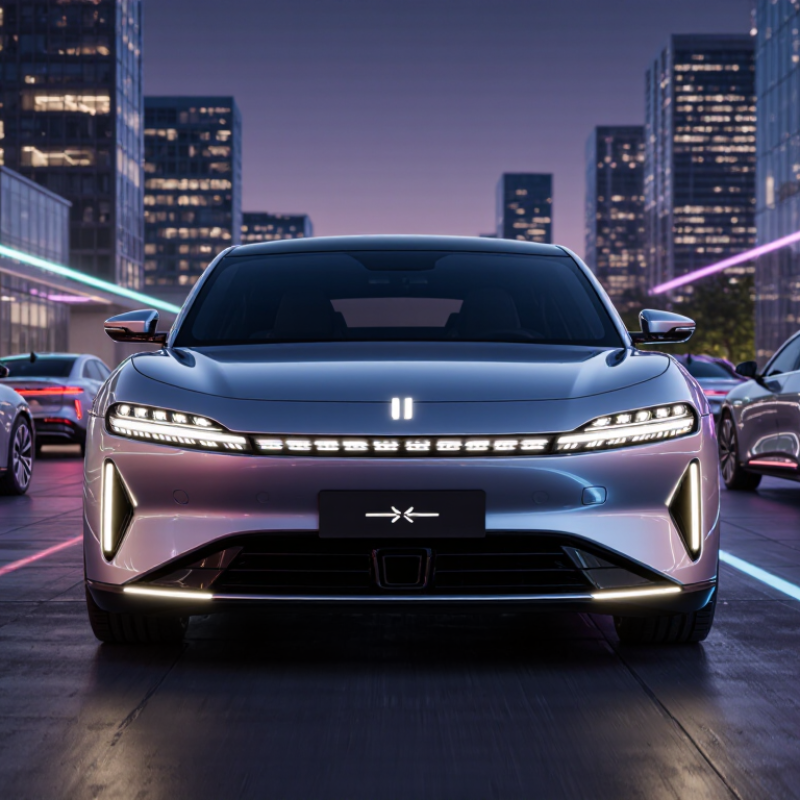
China’s EV lighting supply chain increasingly shapes vehicle design, not merely road visibility. According to the IEA’s Global EV Outlook 2024, China recorded nearly eight million electric car sales in 2023. It represented more than 60% of global electric car sales. This scale gives lighting suppliers faster feedback on styling, assembly, and durability. That matters.
Suppliers now combine optical simulation, precision injection molding, and automated inspection. They produce slim daytime running lights, illuminated grilles, continuous rear lamps, and compact projector modules.
CAAM reported 12.89 million new-energy vehicles produced in China during 2024. Such volume supports specialized tooling and shorter development cycles. Engineers can test light guides, sealing structures, thermal behavior, and color consistency through repeated production runs. Photometric checks and environmental testing also support alignment with international vehicle lighting requirements.
The strongest supply networks connect designers, optical engineers, electronics teams, and mold manufacturers early. A supplier may adjust a light guide by fractions of a millimeter to remove a visible bright spot. Small details change the vehicle’s expression. However, faster styling can create compromise. Decorative lighting may increase heat, wiring complexity, or repair difficulty. Some development teams still prioritize appearance over long-term serviceability. That weakness deserves more attention. Reliable suppliers should document test conditions, material changes, and production tolerances clearly. The IEA’s 2024 report shows market scale, while CAAM’s production data reveals manufacturing depth; neither guarantees consistent quality. Practical audits remain essential.
China’s top EV lighting suppliers should be judged by evidence, not showroom brightness. The IEA’s Global EV Outlook 2025 reports over 17 million electric cars were sold worldwide in 2024. China contributed more than 11 million units. This scale increases demand for reliable lamps, adaptive headlights, and illuminated exterior details.
A serious supplier evaluation begins with photometric performance, thermal control, and optical consistency. Ask for laboratory reports covering beam patterns, glare limits, color temperature, and lifetime testing. Compliance with UNECE Regulation No. 149 and relevant Chinese GB standards matters for export programs. IATF 16949 certification can indicate disciplined automotive processes, but it is not proof of every product’s quality. Review PPAP records, traceability, failure rates, and corrective-action speed. ISO 26262 capability is also valuable when lighting connects with cameras, sensors, or vehicle controls. The weak point is often hidden: a supplier may present excellent samples while production variation remains unclear.
Tips: Request three production samples, not one. Test them after heat, vibration, moisture, and voltage changes. Compare measured data with the supplier’s claims. Check LED bin control and driver protection. Visit the factory when possible, and inspect calibration records. A beautiful prototype can still fail after one harsh winter. Cost deserves attention, but unstable quality usually costs more. According to the IEA, China’s growing EV volume makes delivery capacity important; still, speed should never replace documented engineering evidence.
Illustrative 100-point procurement framework for EV lighting supplier assessment
The framework prioritizes photometric performance, reliability, environmental protection, optical design, compliance, manufacturing quality, and supply support. The percentages represent evaluation weights rather than rankings of individual companies or brands.
China’s EV lighting supply base now covers more than styling. The IEA’s Global EV Outlook 2024 reported nearly 14 million electric car sales in 2023, with China representing about 60% of global sales. This scale pushes suppliers toward faster development, tighter quality control, and more flexible production.
The top ten Chinese EV lighting suppliers show different core strengths. Some specialize in pixel-controlled headlamps, while others focus on thin daytime running lights and illuminated grilles. Several combine optical design, thermal management, and electronic control in one development process. Others are stronger in molded light guides, sealing, or high-volume assembly. These details matter when a lamp must survive rain, vibration, road dust, and repeated temperature changes. Regulatory alignment also remains essential, especially under UNECE lighting requirements and regional type-approval procedures.
Data from Omdia’s automotive lighting research indicates that LED adoption continues to expand across passenger vehicles, increasing demand for compact modules and software-enabled functions. Yet appearance alone can mislead. A sharp daytime signature may still suffer from glare, uneven brightness, or difficult maintenance. Supplier audits should examine photometric test records, humidity-cycle results, traceability systems, and sample consistency. My practical concern is simple: supplier rankings often reward visible design, but long-term reliability receives less attention. That imbalance deserves a closer review.
China Top 10 EV Lighting Suppliers for Better Aesthetics
As electric vehicle sales expand, lighting suppliers shape more than appearance. The IEA’s Global EV Outlook 2024 projected over 17 million electric car sales worldwide in 2024. This growth raises demand for efficient, reliable, and recognizable lighting systems. Suppliers now combine LED modules, adaptive beams, optical simulation, and thermal control. These tools can create sharper light signatures while supporting safer night driving.
Safety must guide styling decisions. An IIHS review found that daytime running lights may reduce two-vehicle daytime crashes by 5% to 10%. However, a bright front signature does not automatically improve visibility. Engineers still need accurate beam patterns, glare control, weather testing, and long-term vibration checks. Rear lamps also deserve attention. Clear brake-light contrast can help drivers react faster in crowded traffic. Small details matter.
Tips: Ask suppliers for photometric test results, thermal-cycle records, and IP protection ratings. Review real road footage, not only studio images. Check whether the lighting remains readable in rain, dust, and direct sunlight. Branding should feel distinctive, but not confusing. This balance is difficult. Some designs look impressive at launch yet age poorly after repairs, software updates, or lens fading. Supplier experience, transparent testing, and careful human review remain essential.
| Profile | Primary EV Lighting Capability | Safety Improvement | Branding and Visual Appeal | Relevant Standards and Practices | Typical Validation Focus |
|---|---|---|---|---|---|
| 01 | Adaptive LED headlamp modules | Improves road illumination while helping limit glare to other road users through beam control. | Creates distinctive front signatures with segmented daytime running lights and precise light guides. | UN R149, UN R123 where applicable, GB 4785, IATF 16949 quality systems. | Photometric performance, beam cutoff, thermal management, vibration, humidity, and condensation resistance. |
| 02 | LED projector and light-source modules | Delivers consistent low-beam and high-beam distribution with controlled optical output. | Supports compact lamp packaging, sharper optical graphics, and flexible front-end styling. | UN R149, GB 4785, ISO 26262 processes when safety-related electronic functions are involved. | Luminous intensity, color consistency, optical alignment, LED junction temperature, and service life testing. |
| 03 | Daytime running light and position-light systems | Improves vehicle conspicuity during daytime driving and low-visibility conditions. | Enables recognizable light signatures using continuous bars, geometric shapes, or connected elements. | UN R148, GB 4785, electromagnetic compatibility testing, and automotive environmental testing. | Visibility angles, photometric limits, color coordinates, switching logic, and water-ingress protection. |
| 04 | Rear combination lamp assemblies | Combines tail, stop, turn, and rear-fog functions to communicate vehicle actions clearly. | Provides coordinated rear graphics, layered optics, smoked effects, and uniform illuminated surfaces. | UN R148, GB 4785, IATF 16949, and production traceability practices. | Reaction and illumination performance, color stability, sealing, thermal cycling, and lens durability. |
| 05 | Dynamic turn-signal and welcome-light systems | Makes intended movement and vehicle approach easier for pedestrians and surrounding drivers to recognize. | Adds sequential animation, welcome sequences, and coordinated front-to-rear visual experiences. | UN R148, GB 4785, EMC requirements, and software-controlled lighting validation. | Animation timing, segment synchronization, visibility, fault behavior, EMC, and repeated-operation endurance. |
| 06 | Light-guide, reflector, and optical-component manufacturing | Supports even light distribution and reduces bright spots that can impair signaling clarity. | Allows thin illuminated surfaces, edge lighting, 3D effects, and high-precision decorative patterns. | Automotive material controls, optical inspection procedures, and applicable UN and GB lighting requirements. | Transmittance, luminance uniformity, dimensional accuracy, surface quality, UV aging, and temperature resistance. |
| 07 | OLED and thin-surface rear-light solutions | Creates broad, uniform signal areas that can improve recognition when regulatory photometric limits are met. | Enables ultra-thin styling, curved surfaces, segmented graphics, and high-end illuminated branding zones. | UN R148, GB 4785, automotive reliability testing, and controlled material qualification. | Uniformity, thermal performance, bending or vibration endurance, color shift, sealing, and lifetime behavior. |
| 08 | Interior ambient and interactive lighting | Improves cabin orientation and user awareness when brightness, glare, and distraction are properly controlled. | Supports personalized color themes, charging-status displays, door illumination, and premium cabin ambience. | Automotive EMC practices, ISO 26262 processes for safety-related functions, and material flammability controls. | Color consistency, flicker, glare, touch or software response, EMC, heat generation, and material aging. |
| 09 | Charging-port and exterior functional lighting | Communicates charging status and improves visibility around charging interfaces at night. | Turns the charging area into a recognizable user-interaction and product-design element. | Ingress-protection testing, EMC requirements, automotive environmental testing, and electrical safety controls. | Water and dust resistance, connector compatibility, color-state accuracy, temperature cycling, and impact resistance. |
| 10 | Integrated lighting electronics and control systems | Provides diagnostics, fault management, stable current control, and coordinated vehicle lighting behavior. | Enables synchronized animations, personalized signatures, software updates, and consistent lighting performance. | ISO 26262 where applicable, automotive EMC requirements, cybersecurity-related development controls, and IATF 16949. | Fault detection, thermal protection, communication reliability, software verification, EMC, and fail-safe behavior. |
Choosing the right Chinese supplier for an EV lighting project requires more than comparing prices. Review the supplier’s experience with daytime running lights, rear lamps, ambient lighting, and intelligent signaling systems. Ask for sample units, optical test data, waterproofing results, and production photos. Real evidence matters.
Check whether the factory controls key processes internally. These include mold development, LED assembly, sealing, aging tests, and final inspection. A capable supplier should explain light intensity, color consistency, thermal management, and connector protection clearly. Request a traceability process for LEDs, housings, and electronic components. Small details often expose weak quality control.
Communication also affects project risk. Confirm response times, engineering support, tooling ownership, and change approval procedures before signing. Ask how the team handles failed samples or delayed materials. A low quotation may hide expensive revisions. It can look attractive at first. However, overly cheap components may create glare, uneven brightness, or early moisture damage. That concern should be tested, not assumed. Arrange an independent inspection when possible, especially before mass production. One overlooked issue remains common: suppliers may show excellent samples but lack stable output across large batches. Require pilot production and compare several units under the same test conditions. The best choice is not always the largest factory. It is the supplier that documents its limits, accepts technical questions, and delivers consistent lighting performance.
Well-designed lighting supports clearer visibility at night and in crowded traffic. Daytime running lights may reduce two-vehicle daytime crashes by 5% to 10%. Brightness alone is not enough. Engineers must control glare, beam shape, and color consistency.
Ask for photometric results, thermal-cycle records, and IP protection ratings. Request waterproofing data and vibration checks. Review rain, dust, and sunlight performance. Studio images can hide uneven brightness.
Clear brake-light contrast can help following drivers react sooner. Rear lamps should remain readable during rain and direct sunlight. Small details matter here. A stylish lamp with weak contrast still creates problems.
A distinctive light signature can make an EV easier to recognize. It should remain clear, not confusing. Designers should avoid shapes that lose meaning after lens fading or repairs. Visual appeal needs practical discipline.
Look for experience with daytime running lights, rear lamps, ambient lighting, and intelligent signaling. Ask for sample units and optical test data. Production photos can reveal useful details. Real evidence matters more than polished promises.
Important processes include mold development, LED assembly, sealing, aging tests, and final inspection. Internal control can improve consistency. Request traceability for LEDs, housings, and electronic components. Small records often expose weak quality control.
A low price may hide costly revisions or unstable components. Test for glare, uneven brightness, and early moisture damage. Do not assume the cheapest option is poor. Do not trust it blindly either.
Require pilot production before full manufacturing. Compare several units under identical test conditions. Check brightness, color, sealing, and connectors. Excellent samples can still misrepresent large-batch performance. No test plan is perfect. Human review remains necessary.
China’s EV lighting supply chain plays an important role in modern vehicle design, combining advanced optics, efficient production, flexible customization, and reliable quality control. This article introduces ten leading Chinese EV lighting suppliers by examining their strengths in engineering, manufacturing capacity, intelligent lighting systems, design support, testing, and delivery performance. It also explains the key criteria buyers should consider, including product durability, energy efficiency, compatibility, customization options, certification readiness, and after-sales support.
Lighting does more than illuminate the road; it helps define a vehicle’s identity and improve driver and pedestrian awareness. Understanding how does lighting affect electric vehicle aesthetics reveals how daytime running lights, ambient lighting, distinctive rear lamps, and coordinated light signatures can enhance visual appeal and brand recognition. By comparing supplier capabilities and project requirements, EV manufacturers can select suitable partners to improve safety, strengthen design consistency, and create a more memorable appearance while maintaining practical performance and production efficiency.

EV Light