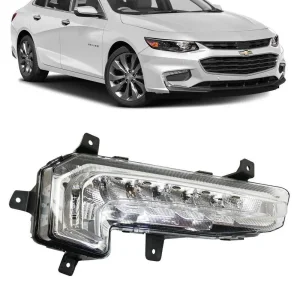
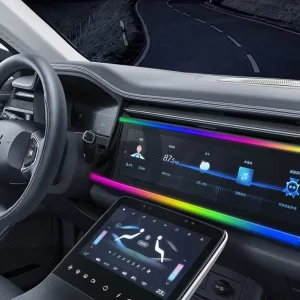
EV Light
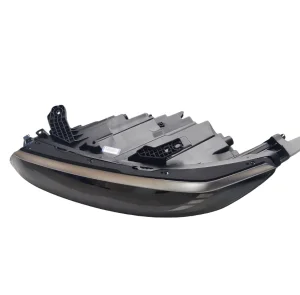
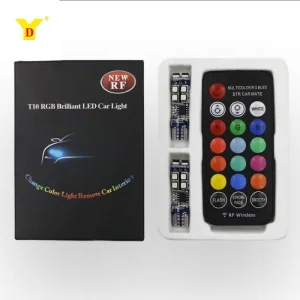

Deep Technical Whitepaper: The Evolution of Intelligent EV Light Management Systems
As the automotive landscape shifts inexorably from Internal Combustion Engines (ICE) to New Energy Vehicles (NEVs), the architectural requirements governing exterior and interior vehicle lighting systems have undergone a profound paradigm shift. Modern Electric Vehicles (EVs) are no longer just transportation vessels; they are intelligent, software-defined computing nodes on wheels. Within this matrix, light management has evolved from simple illumination systems to high-bandwidth, energy-efficient interactive platforms integrated with Advanced Driver Assistance Systems (ADAS) and vehicle powertrain controllers.
At the center of this transformation is Hangzhou EV Light Co., Ltd., a premier OEM/ODM manufacturer specializing in custom EV LED lighting and intelligent control management. By deploying state-of-the-art optical design, thermal simulation, and bus-communication frameworks, we supply key structural systems that directly optimize power allocation, minimize battery draw, and maximize passenger and pedestrian safety.
1. Global Commercial & Industrial Status
The global EV light management market is experiencing double-digit compound annual growth (CAGR), driven by the mass adoption of electric buses, passenger cars, commercial delivery vehicles, and micromobility devices. Traditional lighting systems designed for ICE platforms rely on constant 12V/24V generator-driven electrical buses with minimal prioritization for energy conservation. In contrast, EV light systems must interface directly with complex low-voltage DC-DC converters powered by high-voltage traction batteries, making energy-to-lumen efficiency metrics a key design criterion.
Globally, tier-1 OEMs and EV manufacturers are moving away from discrete lighting assemblies toward centralized, software-driven lighting control modules (LCMs) that control headlights, taillights, dynamic status indicators, and ambient cabin clusters over CAN, LIN, and Automotive Ethernet buses. Regions such as North America, the European Union, and East Asia have implemented rigorous standardizations (e.g., ECE Regulations, FMVSS 108, and China GB standards) demanding higher safety margins, automated adaptive beam leveling, and low electromagnetic interference (EMI) profiles that comply with CISPR 25 Class 5 limits.
2. Evolutionary Trends in EV Light Management
The engineering trajectory of EV lighting is characterized by three major industrial trends:
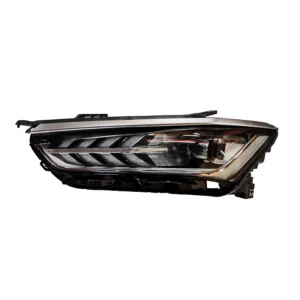
- Adaptive Driving Beams (ADB) & Matrix LED Architectures: Utilizing multi-pixel LED setups controlled by algorithmic camera systems to selectively dim individual pixels, avoiding blinding oncoming motorists while maintaining full peripheral high-beam illumination.
- Integrated Charging Interface Displays: The conversion of taillight panels and exterior light bars into smart interactive displays that indicate high-voltage state-of-charge (SoC), autonomous driving modes, and pedestrian communication signals.
- Ultra-Low Profile Optics: Leveraging micro-optic lenses and light guides to drastically reduce the volume and weight of physical headlamp structures. This reduction helps lower vehicle drag coefficients, directly extending overall battery range.